Biosensors: Biosensors are devices used to detect the presence or concentration of a biological analyte, such as a biomolecule, a biological structure or a microorganism. Biosensors consist of three parts: a component that recognizes the analyte and produces a signal, a signal transducer, and a reader device.
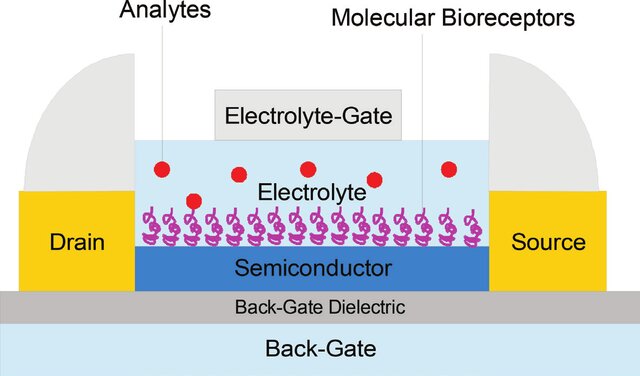
Field Effect Transistors: A FET is a semiconductor device that controls the flow of current using an electric field. It has three main terminals: Gate, Source, Drain. Because FETs use voltage control, they are very useful in:
• Sensors
• Integrated circuits
• Low-power devices.
What is FET based Biosensor?
In FET based biosensor, biological molecules attach to receptors placed on the gate of the FET. When these molecules bind, they change the electric field at gate. This change affects the channel of the FET and changes how easily current can flow. As a result, the drain current changes. In this way, a biological signal is converted into a electrical signal.
Why FET based Biosensors are important in biomedical engineering?
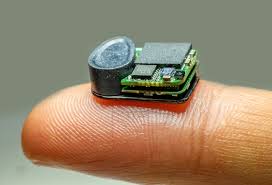
FET-based biosensors are important because they can detect very small amounts of biological substances. They help doctor and scientists check blood sugar, diagnose diseases, detect viruses, and monitor health quickly. These sensors are small, fast and use little power, so they can be used in wearable devices and small medical tools.
APPLICATIONS:
- Glucose monitoring: used by diabetic patients to measure blood sugar levels.
- Disease detection: helps detect cancer marker, bacteria, and viruses. DNA and protein detection: useful in genetic testing and research.
Wearable health devices: can monitor heart rate, sweat or other body signals in real time.
Advantages of FET-Based Biosensors:
• They are highly sensitive can detect very small amounts of biological molecules.
• They give fast results in real time
• They can be made small and used for portable devices.
• Consumes very low power.
• Can easily combine with circuits for signal processing and data analysis.
Disadvantages of FET-Based Biosensors:
• Manufacturing of FET based biosensor can be challenging and costly.
• The results can be affected if the surface of sensor gets dirty or damaged
• If other molecules stick to the sensor by mistake, will give the false result.
• May not remain stable for long periods without special storage
. • Their performance can be affected by changes in temperature, pH, or salt.