There are situations in medicine that quietly change the way you think about technology. One of them is realizing that some patients are fully conscious, aware, and thinking, but unable to speak, move, or express even the simplest needs. The brain is working, thoughts are forming, but the body cannot respond.Brain-Computer Interfaces (BCIs) exist because of this gap between intention and action.
BCIs are built on a simple but powerful idea: if the brain is still generating signals, communication should still be possible.
Understanding the Idea Behind BCIs
The human brain communicates using electrical signals. Every thought, decision, or intention creates patterns of neural activity. In conditions like locked-in syndrome, ALS, severe stroke, or spinal cord injury, these signals are still present they just can’t reach the muscles.
A Brain-Computer Interface creates a direct pathway between the brain and an external device. Instead of relying on muscles or speech, BCIs allow brain signals to control computers, text systems, wheelchairs, or communication devices directly.
At a basic level, a BCI system works by recording brain signals, processing them, translating them into commands, and sending those commands to an output device. What makes this possible is not just neuroscience, but biomedical engineering working quietly in the background.
Where Biomedical Engineering Fits In
Brain signals are extremely weak and easily affected by noise. They are not “ready-to-use” signals. Biomedical engineers are the ones who make these signals usable.
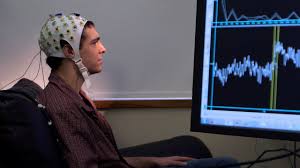
From designing electrodes that can safely and comfortably sit on the scalp, to dealing with extremely weak brain signals buried in noise, biomedical engineering plays a critical role in making BCIs functional. Brain signals recorded through EEG are usually in the microvolt range and easily distorted by muscle movement, eye blinks, or external interference.
Biomedical engineers design amplification circuits to strengthen these signals without distortion and apply filtering techniques to remove unwanted noise. Beyond hardware, engineers develop signal processing and pattern recognition algorithms that can detect meaningful brain activity related to intention or choice.
Giving Communication Back to Patients
One of the most meaningful applications of BCIs is communication. Some patients use BCIs to select letters on a screen, answer yes/no questions, or express basic needs using only their brain activity. The process may seem slow, but for someone who cannot speak at all, even a single communicated thought is life-changing.
BCIs are also being explored for:
- controlling wheelchairs or robotic arms
- assisting rehabilitation after neurological injury
- enabling interaction with smart environments
- restoring limited independence to patients with severe disabilities
These systems don’t replace the human body they work around its limitations.
Innovation Beyond the Lab
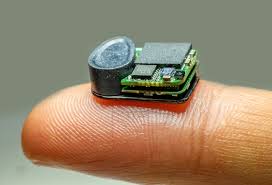
What’s especially interesting about BCIs is how quickly they are moving beyond controlled research environments and into more practical settings. Advances in wearable EEG systems, non-invasive electrodes, and compact processing units have made BCI technology more portable and user-friendly. The focus is gradually shifting from asking whether BCIs are possible to addressing engineering challenges like long-term reliability, signal stability, user comfort, and affordability. These challenges matter because a system that works well in a lab but fails in daily life has limited value for patients.
This is where biomedical engineering becomes especially impactful. The field doesn’t stop at reading brain signals; it focuses on refining systems so they can function consistently in real-world conditions. Even small improvements in electrode design, signal clarity, processing speed, or system responsiveness can significantly affect how usable a BCI is for a patient. Innovation, in this context, is not about complexity but about practicality.
A Quiet but Powerful Technology
Brain-Computer Interfaces may not always appear dramatic or futuristic, but their impact is deeply human. They challenge the assumption that the inability to move or speak means the inability to communicate. BCIs highlight an important truth: even when the body fails, the brain often continues to think, decide, and respond.
For anyone exploring biomedical engineering, BCIs represent what the field truly stands for. They are not just about advanced electronics or algorithms, but about restoring connection, dignity, and autonomy. Sometimes, enabling someone to express a single thought or choice can be more meaningful than designing the most complex medical device.