
When we talk about biomedical engineering, one thing that always stands out to me is biomedical signals. Honestly, these signals are one of the clearest way a human body communicates with us. Our body is constantly producing signals, and biomedical engineering is the field that helps us capture, understand, and use those signals in a meaningful way.
Biomedical signals are generated by physiological activities inside the body, especially electrical activity. Among all biomedical signals, ECG, EEG, and EMG are the most commonly used and clinically important ones. These signals are the backbone of many diagnostic and monitoring systems, and working with them is a core part of biomedical engineering.
What Are Biomedical Signals? and Where Does Biomedical Engineering Fits In?
If I explain it in a simple way, biomedical signals are those signals through which our body communicates with us. Our heart, brain, and muscles are constantly producing electrical signals and we call them ECG for the heart, EEG for the brain, and EMG for the muscles.
These signals are already present inside the body, but they are extremely weak and often mixed with a lot of noise, so we can’t understand them directly. This is where biomedical engineering fits in. We learn how to capture these tiny and noisy signals using electrodes, clean them up using filters, amplifiers, basic electronics and signal processing, and turn them into waveforms so that doctors can actually use them.
Why Biomedical Signals Matter So Much in Biomedical Engineering?
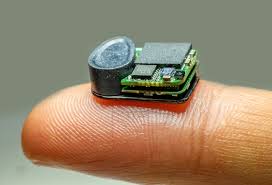
What’s really exciting is that biomedical engineering doesn’t stop at just reading these signals. Biomedical signals give us non-invasive, real-time information about the body so now doctors not only rely on symptoms, but they can actually see what’s happening inside our body. There’s constant innovation happening, like wearable ECG monitors in smartwatches to brain–computer interfaces that let people control devices with their thoughts, and even EMG-based prosthetics that move with real muscle signals.
Today, these signals are everywhere in ICUs, diagnostic labs, wearable devices, and remote monitoring systems. With advancements in signal processing, artificial intelligence, and smart medical devices, biomedical engineers are continuously improving how ECG, EEG, and EMG signals are collected, analyzed, and used. Biomedical engineers, not only understands the body’s signals but also create tools and devices that make healthcare more accessible, smarter, and way more interactive.