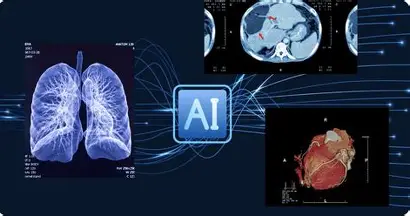
Modern healthcare highly depends on the fundamentals of Medical Imaging. It enables clinicians to assess the internal anatomy of the human body despite opting for invasive techniques. Nevertheless, the precise and accurate interpretation of these images is still a substantial challenge, which Artificial Intelligence, majorly deep learning, is expeditiously transforming.
The Challenge of Traditional Medical Imaging
The traditional methods of Medical Imaging require highly trained radiologists to interpret this complex data, often leading to missed or delayed diagnoses. Moreover, factors like image noise, subtle abnormalities, and human fatigue can lead to missed findings or delayed diagnoses. Because of high volume of imaging data being generated every hour, the healthcare systems encounter increased pressure and workload despite maintaining the accuracy of results. Therefore, AI-powered deep learning models can be procured to speed up and validate the process.
What Is Deep Learning in Medical Imaging?
Deep learning is a subset of machine learning that works on the concept of big data and uses artificial neural networks, mimicking the function of human brain and analyze images. The large datasets contain labelled images that enable recognition of abnormalities like fractures, tumours, etc. With that, the deep learning models can extract highly relevant features on its own with high accuracy, unlike traditional image processing methods.
Applications of AI in Medical Imaging
1. Early Disease Detection
With the help of Deep learning models, diseases can be detected at very early stage. For example, lung cancer, breast cancer detection, diabetic retinopathy can all be detected via AI systems for improved patient outcomes and reduced treatment cost.
2. Improved Diagnostic Accuracy
AI can highly enhance the diagnostics by facilitating radiologists rectify errors by identifying abnormal regions in an image and ensuring that minor findings should not be neglected. Thus, the collaboration of AI and clinicians would confer well grounded results and authentic diagnoses rather than completely replacing human expertise. The collaboration of AI and human would bring forth an excellence rather than completely replacing humans with AI.
3. Faster Image Analysis
The AI models have a super sonic speed combined with better accuracy; hence, it can analyze images within seconds, resulting in minimized reporting time. This is propitious in emergency situations like internal bleeding, stroke diagnosis, Trauma assessment, etc and can ultimately save lives.
4. Workflow Optimization
Certain repetitive tasks like image segmentation, measurement, and classification can be facilitated with the help of AI. This would enable healthcare professionals to concentrate on patient care rather than manual analysis for an efficient work process.
Role of Biomedical Engineers
Biomedical engineers are of great use in integrating AI into medical imaging by R&D of AI assistive medical imaging tools, ensuring data quality and proper annotation of data, and clinically validating model performance. They can work jointly with clinicians, particularly radiologist and adhere to regulatory framework, ethical regulations, and patient safety. Their interdisciplinary background serves as a way in incorporating engineering principles, medicine, and computer sciences in the field of Medical Imaging.
Challenges and Ethical Concerns
As everything has its pros and cons, AI in medical imaging, despite having plenty of advantages, faces several challenges as well. One of the most highlighted challenges up till now is data privacy and security issues. Consequently, the limited interpretability of AI models is an obstacle, too. With that, the biasness is endorsed on the training dataset as human nature itself is bias which ultimately incorporates the same in AI models. Addressing and finding a way out for these issues is essential to corroborate that AI technologies are safe, reliable, and effective in clinical settings.
Future Scope
The future majorly depends on intelligent systems working simultaneously with clinicians to uplift the concept of AI-augmented radiology. Further advancements can include real-time diagnostics, cross-modality image analysis, etc. In the near future, AI will not only be restricted to diagnostics but also in predicting disease trajectory and treatment procedures.
Conclusion
The AI-driven tools are igniting the revolution of medical imaging as they boost speed, accuracy and optimization in diagnosis. Rather than replacing healthcare professionals, AI has enlightened them with upgraded tools for high productivity. In addition, this domain signifies an impactful pathway for innovation, particularly for biomedical engineers, that would undoubtedly metamorphose the future of healthcare.