3D Bioprinting of Human Tissue
Introduction
With current technological advancements, 3D bioprinting is becoming increasingly important in medicine. It has the potential to revolutionize tissue repair, drug testing, and organ transplantation in the future. Research is underway to utilize this technology to print fully functional organs, reduce transplant waiting lists, and create patient-specific tissues. Scientists are also exploring its role in personalized medicine, regenerative therapies, and disease modeling. As innovation continues, 3D bioprinting may significantly transform modern healthcare systems.
What is 3D Bioprinting?
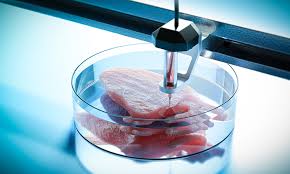
3D bioprinting is a technique in which special printers use living cells and biomaterials to produce tissues layer by layer. It combines biology, engineering, material science, and modern 3D printing methods. Unlike traditional 3D printers that use plastic or metal, bioprinters use a material called bio-ink. Bio-ink is a mixture of living cells and hydrogels that supports cell survival and tissue formation.
Steps in 3D Bioprinting
- Imaging and Designing: Doctors obtain images of the required tissue or organ using CT scans or MRI. A digital 3D model is then created on a computer.
- Preparation of Bio-ink: Cells are collected from the patient or donor and mixed with biomaterials to prepare bio-ink.
- Printing: The bioprinter prints the tissue layer by layer according to the digital design.
- Maturation: After printing, the tissue is placed in a bioreactor. In this controlled environment, cells grow and develop into functional tissue.
Types of Tissues Printed
Scientists have successfully printed several types of tissues, including:
- Skin for burn treatment
- Cartilage
- Bone
- Blood vessels
- Liver and heart tissues for research
Applications in Medicine
- Organ transplantation: Bioprinting may help reduce the shortage of donor organs.
- Drug testing: New drugs can be tested on printed tissues instead of animals or humans.
- Wound healing: Bio-printed skin can help in treating burns and injuries.
Advantages
- Helps overcome organ shortage
- Useful for research and education
- Faster and safer drug testing
- Lower risk of rejection
Challenges
- Printing complex organs is still difficult
- Technology is expensive
- Proper blood supply to printed tissue is a challenge
- Ethical and regulatory concerns exist
Future of 3D Bioprinting
In the coming years, 3D bioprinting may allow doctors to create fully functional organs like kidneys, hearts, and lungs. This could greatly improve transplantation and save many lives. Research is ongoing to improve materials, printing techniques, vascularization methods, and long-term cell survival to make fully functional organ printing a reality.
Conclusion
3D bioprinting of human tissue is a revolutionary development in modern medicine. Although it is still in the developing stage, it has the potential to transform healthcare by providing customized tissues and organs, improving treatment methods, and saving lives.